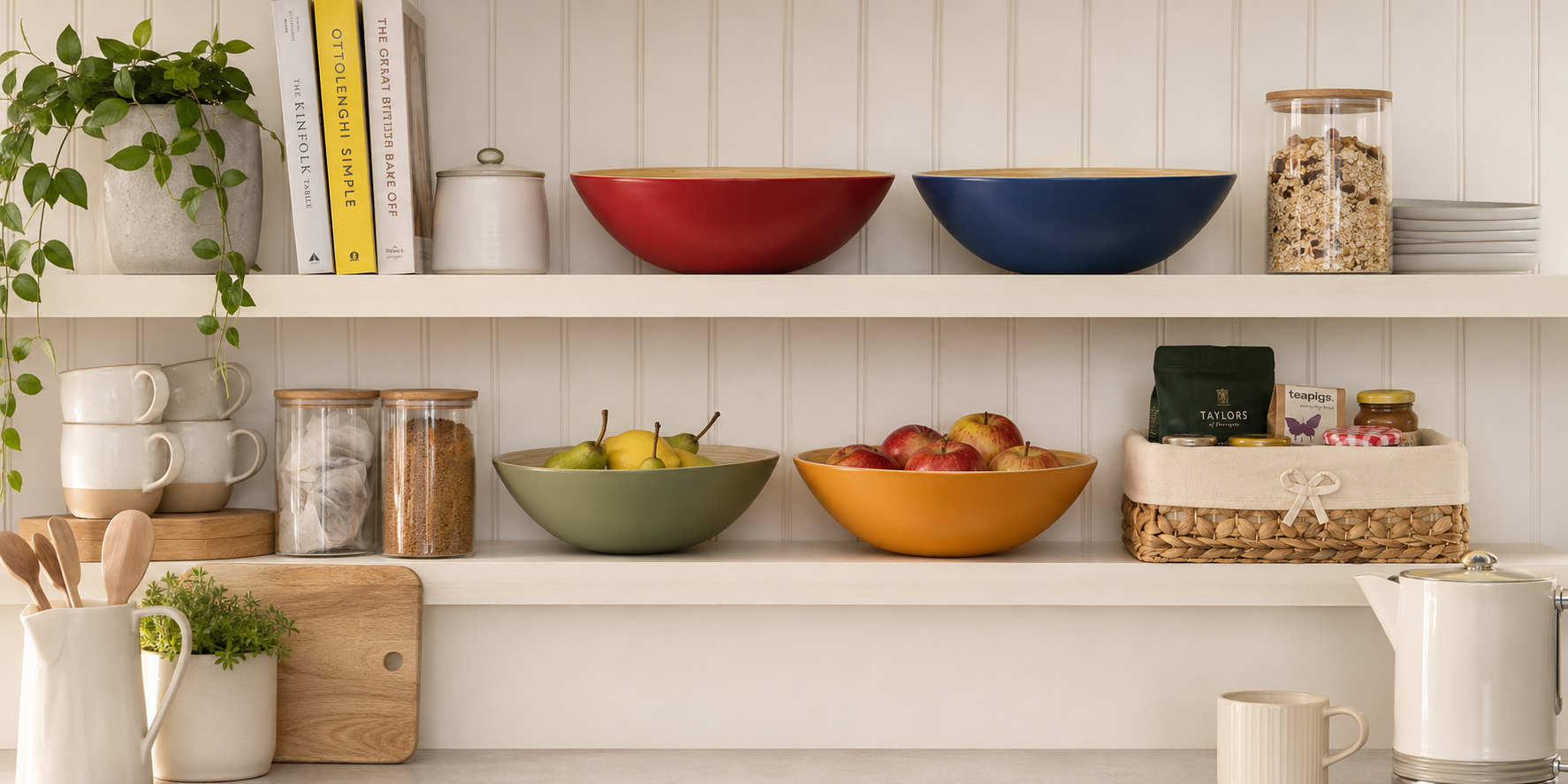
Thinking of buying a fruit bowl for your home decor? From handcrafted lacquered designs to everyday bamboo tableware, there are several styles to consider. Before choosing one, it helps to understand how bamboo bowls are made, what they look and feel like, how versatile they are, and the care they require.
What Is a Bamboo Bowl?
A bamboo bowl is a household item made using bamboo as its main material. Depending on its construction, it may be designed for food preparation, serving or decorative display. Bamboo bowls vary considerably in their finishes, durability and intended uses, so understanding the different types can help you choose one that suits your home.
Three common types of bamboo bowls include:
- Laminated bamboo bowls: Made from joined pieces of bamboo, often with a visible grain and natural appearance.
- Handcrafted lacquered bamboo bowls: Made using traditional bamboo-working techniques, with a protective and decorative lacquer finish.
- Bamboo fibre composite bowls: Manufactured from processed bamboo fibres combined with other materials, such as binding resins.
These products should not be considered interchangeable. Their construction, surface coatings and suitability for different uses can vary significantly.
What Does a Lacquered Bamboo Bowl Feel and Look Like?
Lacquered bamboo bowls combine the natural character of bamboo with a smooth, decorative surface. Unlike unfinished bamboo, their appearance is influenced by the colour and sheen of the lacquer. Handcrafted designs can bring warmth, texture and a distinctive visual character to contemporary interiors without the weight or appearance of traditional ceramics.
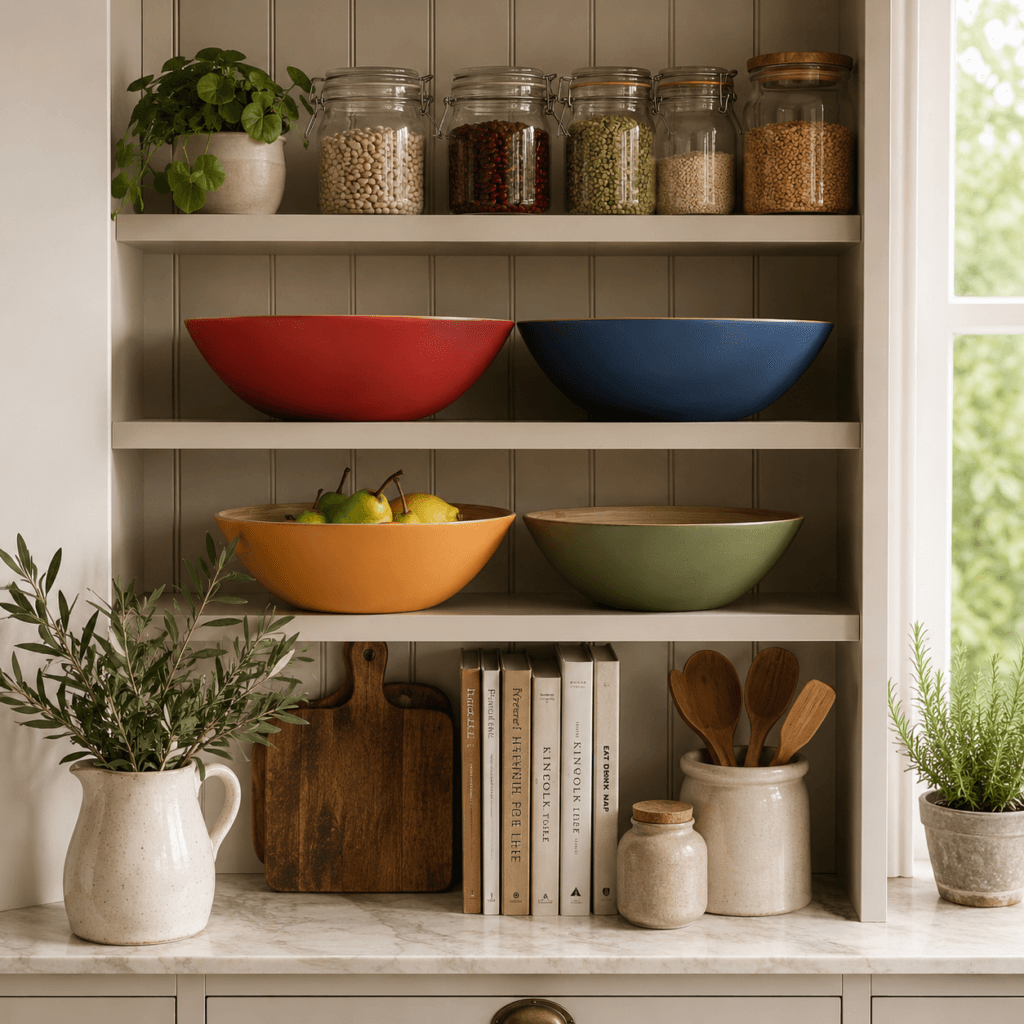
At Tonking Eco Houseware, our handcrafted Vietnamese bamboo bowls offer a choice of colours and sizes to complement different interiors.
The collection includes:
- Royal Blue and Matte Red: Bold colours for contemporary spaces.
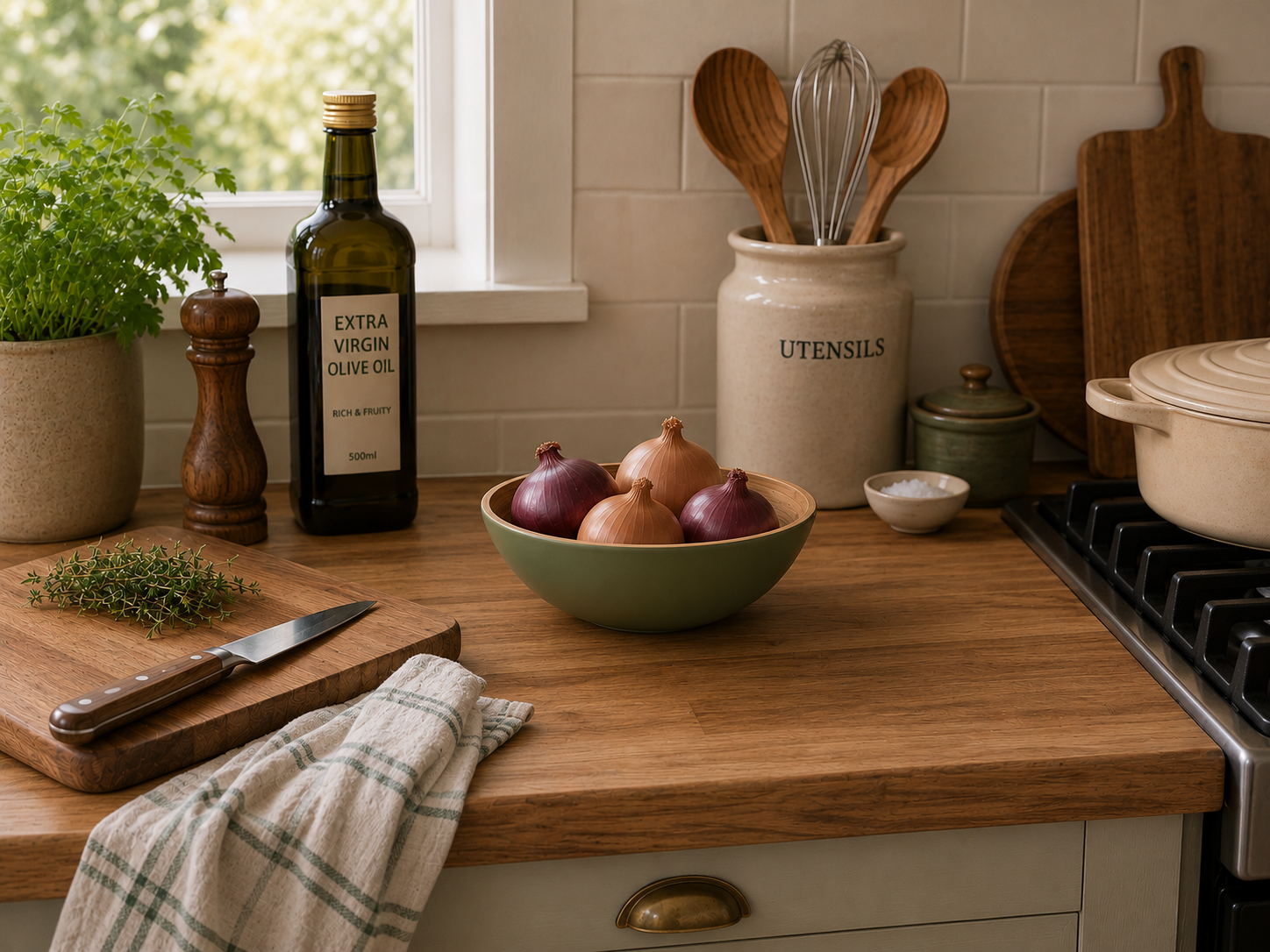
- Olive Green: An understated choice for Japandi and nature-inspired interiors.
- Natural: A versatile option for neutral, rustic or minimalist settings.
- Mustard Yellow: A warm accent for smaller kitchens and autumnal colour schemes.
Our 25cm and 30cm designs make it easier to choose a bowl that complements your space.
What Are Bamboo Bowls Commonly Used For?
Bamboo bowls have a variety of uses, depending on their construction and finish. Some are manufactured for food preparation or serving, while others are better suited to decorative purposes. Handcrafted lacquered bowls are particularly appealing as table centrepieces, fruit displays and home accessories, where their colours and textures can become part of the interior design.
A 30cm bamboo bowl can create a focal point on a dining table, kitchen island or sideboard.
For a smaller space, the Olive Green Bowl 25cm offers a more compact decorative option.
For direct food contact, always check the manufacturer’s guidance for the specific bowl and finish rather than assuming every bamboo product is suitable.
What Are the Advantages of Bamboo Bowls?
Bamboo bowls offer several advantages for home styling, including their distinctive appearance, range of finishes and versatility as decorative accessories. Bamboo is also a relatively fast-growing plant, although the environmental impact of a finished bowl depends on its manufacturing process, coating, transportation and lifespan. Choosing a well-made product that suits your needs is important.
For interior design, their strongest appeal is often aesthetic.
A lacquered bamboo bowl can introduce colour without requiring an entirely new table setting. Its handcrafted character also provides an alternative to mass-produced decorative accessories.
Unlike ceramic bowls, bamboo designs may offer a different combination of visual warmth and lightness, although exact weight and durability depend on construction.
How Much Maintenance Do Bamboo Bowls Require?
Lacquered bamboo bowls require gentle but straightforward maintenance. Clean the surface using a soft, slightly damp cloth and dry it immediately afterwards. Avoid prolonged water exposure, abrasive cleaning products and excessive heat. Unlike many ceramic or glass bowls, handcrafted lacquered bamboo should not be soaked, placed in the dishwasher or used in a microwave.
For everyday care:
- Remove dust with a soft cloth.
- Gently wipe away surface marks when necessary.
- Dry thoroughly after cleaning.
- Store in a dry location.
- Avoid sharp utensils and abrasive surfaces.
These simple habits help preserve the decorative lacquer finish.
What Are the Limitations of Bamboo Bowls?
The main limitations of lacquered bamboo bowls relate to moisture, heat and surface wear. Their lacquer finish can deteriorate if exposed to water for prolonged periods, while sharp objects may cause scratches. They are not suitable substitutes for heat-resistant cookware or dishwasher-safe ceramics. Their intended use also depends on the specific materials and coating.
If you frequently serve hot soups, prepare food using sharp utensils or prefer dishwasher cleaning, ceramic or glass tableware may be more practical.
For decorative use, however, lacquered bamboo offers a different aesthetic that may be well worth the additional care.
Who Might Prefer Bamboo Over Ceramic or Glass?
Bamboo bowls may appeal to people who value handcrafted details, natural materials and distinctive interior accessories. They are particularly suited to homes where decorative pieces contribute to the overall atmosphere. Ceramic and glass remain practical choices for heat resistance and frequent washing, while lacquered bamboo offers an attractive alternative for carefully maintained decorative displays.
For a modern dining room, the Royal Blue Bamboo Bowl 30cm can introduce a confident splash of colour.
If your home favours softer, earthy tones, consider the Olive Green Bamboo Bowl 30cm as a subtle table centrepiece.
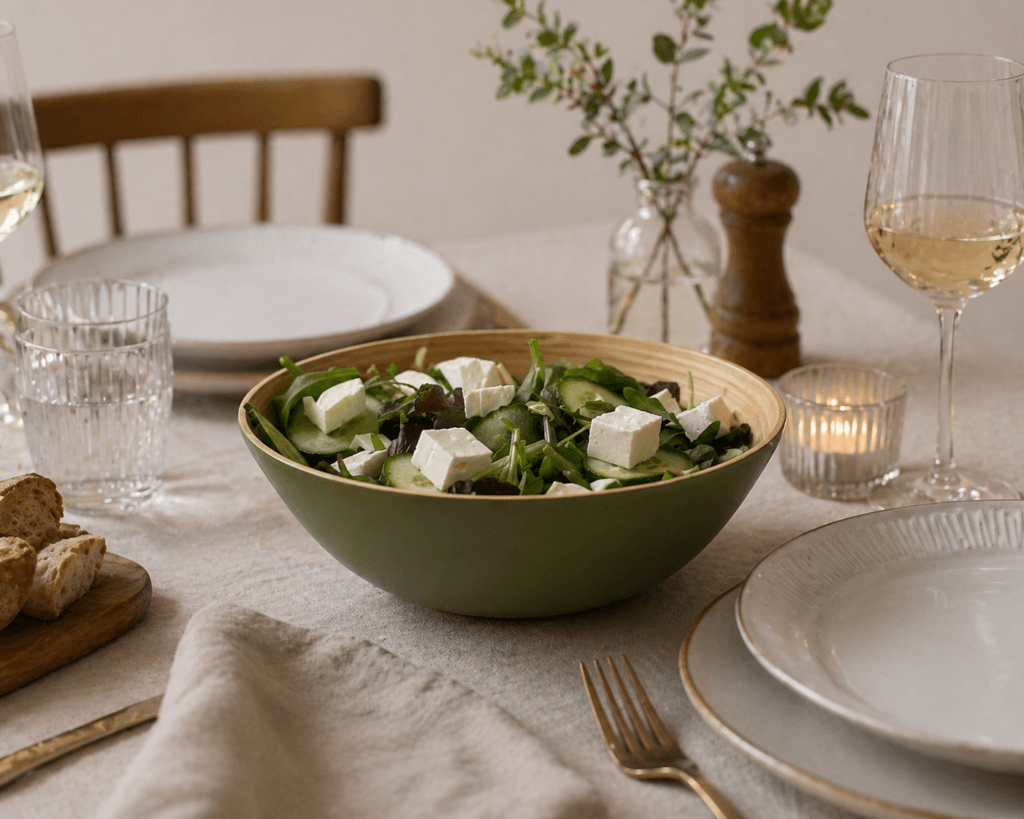
The right bowl depends on how you intend to use it. If easy washing and hot-food serving are priorities, ceramic or glass may be the better choice. If you are looking for decorative craftsmanship, warm colours and a distinctive finishing touch, explore the handcrafted bamboo bowl collection at Tonking Eco Houseware.