Lacquered bamboo bowls bring warmth, colour and natural texture to the home, but they need gentler care than ceramic or glass. The key is simple: keep cleaning brief, avoid prolonged exposure to water, and dry the bowl promptly. With sensible everyday care, you can help preserve both the bamboo structure and its lacquered finish.
How should you clean a lacquered bamboo bowl?
Clean a lacquered bamboo bowl gently by hand, using a soft damp cloth or sponge and only as much water as necessary. Avoid abrasive scourers and harsh cleaning products. Once cleaned, remove excess moisture and dry the bowl promptly rather than leaving it wet on the draining board.
Bamboo is a natural material, while the coloured or natural lacquer provides the decorative surface finish. Scrubbing aggressively can wear that finish over time.
For light everyday cleaning, wiping the interior and exterior may be sufficient. When more thorough cleaning is needed, keep contact with water as brief as practical.
Can bamboo bowls get wet?
A lacquered bamboo bowl can tolerate the limited moisture involved in normal careful cleaning, but it should not be treated as waterproof. Repeated or prolonged exposure to water can shorten the life of the lacquered surface and may eventually contribute to deterioration, lifting or peeling of the finish.
This is one of the main differences between bamboo homeware and glazed ceramic or glass.
If the bowl becomes wet, there is no need to panic. Simply remove the moisture and allow it to dry fully.
Why shouldn’t you soak bamboo bowls?
Soaking exposes both the bamboo and its protective finish to moisture for much longer than necessary. Over time, this can place unnecessary stress on the material and lacquer. For that reason, Tonking recommends cleaning bamboo bowls promptly rather than leaving them submerged in a sink or filled with water.
The same principle applies to leaving a damp cloth sitting inside the bowl for extended periods.
Can bamboo bowls go in the dishwasher?
No. A lacquered bamboo bowl should be hand-cleaned rather than placed in a dishwasher. Dishwashers combine prolonged moisture, heat and detergents, creating much harsher conditions than gentle hand cleaning and potentially accelerating wear to both the natural bamboo and its decorative lacquered finish.
The microwave should also be avoided. Bamboo homeware is best treated as natural decorative tableware rather than conventional ceramic kitchenware.
How should you dry and store bamboo bowls?
Dry your bamboo bowl soon after cleaning and make sure it is completely dry before putting it away. Store it in a dry, ventilated cupboard or on an open shelf, away from persistent damp, strong heat and other conditions that could gradually affect the natural material or lacquered finish.
Avoid stacking damp bowls together, as trapped moisture takes longer to evaporate.
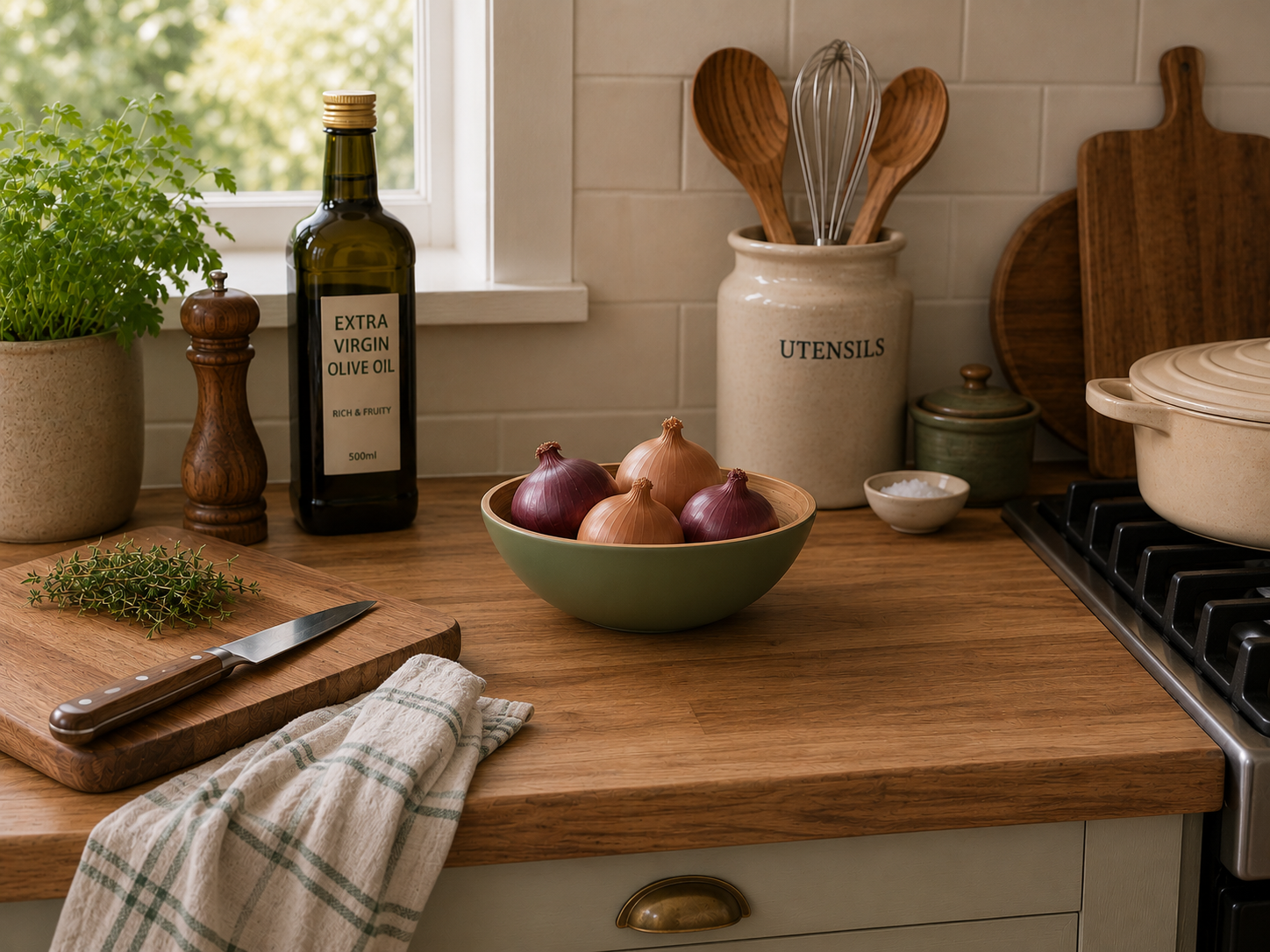
Once dry, bamboo works particularly well as part of an open kitchen display. A Natural Bowl 30cm can introduce warmth to a neutral kitchen, while the smaller Olive Green Bowl 25cm suits compact worktops and smaller households.
How can you help a bamboo bowl last longer?
The most effective habits are also the simplest:
- Clean gently by hand
- Never leave the bowl soaking
- Dry it promptly after cleaning
- Avoid dishwashers and microwaves
- Keep abrasive cleaners away from the lacquer
- Store only when completely dry
Bamboo has a warmer, more organic character than glass or ceramic, but that character comes with different care requirements. Treating it as a natural material rather than indestructible kitchenware is the best way to preserve the appearance that made you choose it in the first place.